
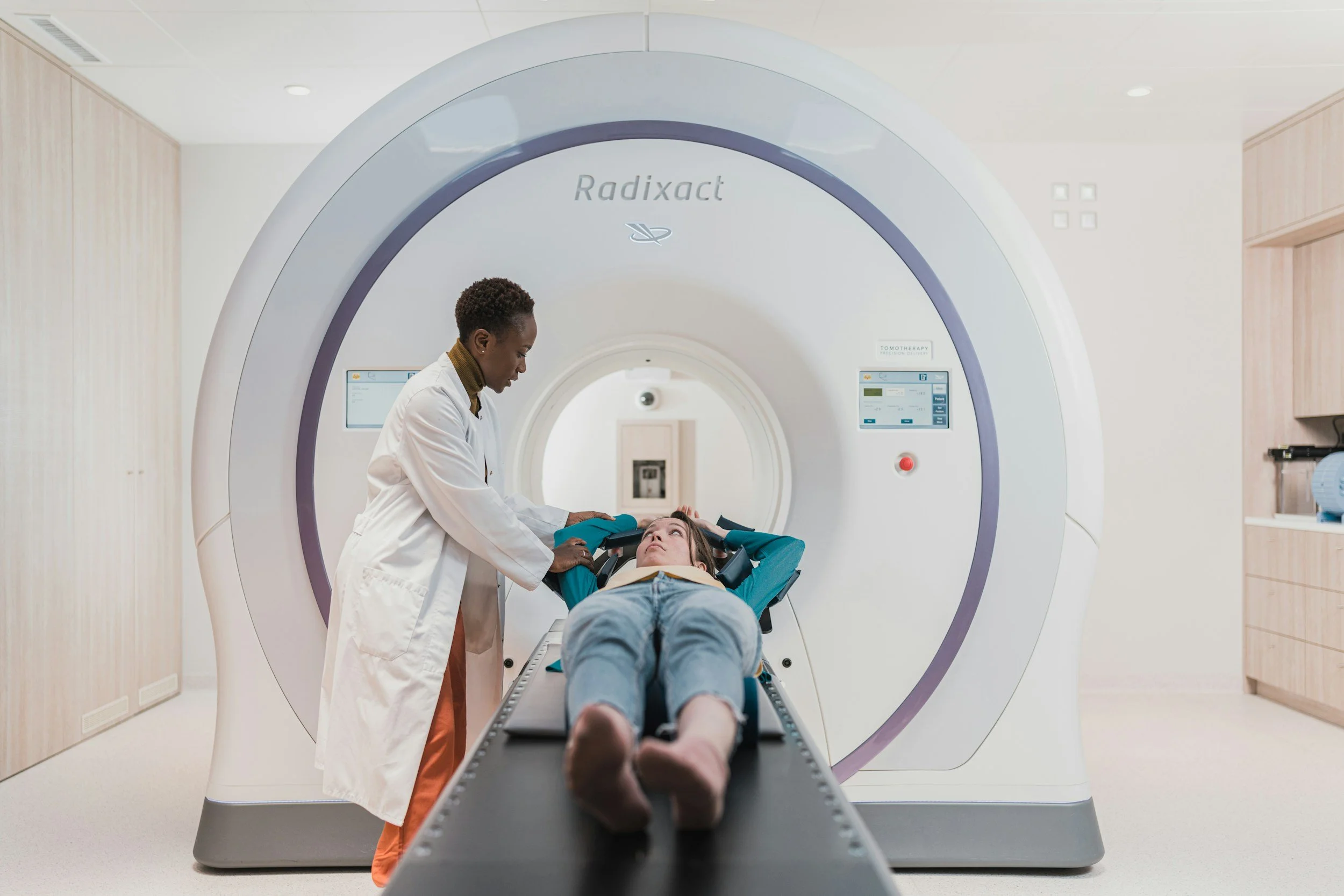
Chronic Back Pain and MRI Findings: Why It’s So Confusing
If you’re dealing with chronic back pain, chances are you’ve gone down the MRI path.
Maybe your doctor pointed to a bulging disc or herniated disc and said, “There it is—that’s the problem.” And at first, that might have felt like relief. Finally, an answer.
But then things didn’t improve the way you expected.
So now you’re left trying to make sense of it all—avoiding certain movements, skipping workouts or favorite activities, maybe even hesitating to go out with friends to a restaurant or movies—because you’re worried the pain will crop up again.
And that’s exhausting.
Chronic back pain doesn’t just affect your body—it seeps into everything. Your ability to exercise. Your sleep. Your mood. Your social life. Over time, it can shrink your world in ways that feel incredibly frustrating and isolating.
How Chronic Back Pain Can Take Over Your Life
When you believe your MRI for back pain is showing damage that could worsen, it makes sense that you’d start to pull back.
You might:
Stop exercising the way you used to
Avoid social situations where sitting or standing feels uncertain
Feel more anxious about movement in general
Notice your mood dropping as your activity level decreases
And here’s the tough part—this can create a downward spiral.
Less movement can lead to more stiffness, more fear, and often more pain. Add in stress, frustration, or even a sense of hopelessness, and your nervous system becomes even more activated… which can actually intensify chronic back pain.¹
So what if the MRI isn’t telling the full story?
What If Your Bulging or Herniated Disc Isn’t the Real Problem?
This might feel surprising, but research has shown that many people with perfectly normal MRIs experience chronic back pain—while many others with bulging discs or herniated discs have no pain at all.²
Let that sink in for a moment.
Which means: finding something on an MRI doesn’t necessarily mean it’s the source of your pain.
So what else could be going on?
Neuroplastic Pain: A Different Way to Understand Chronic Back Pain
There’s a growing body of research pointing to something called neuroplastic pain.
This is pain that is very real—but driven by the brain and nervous system rather than ongoing tissue damage.
Sometimes this starts with a real injury. But after the body heals, the brain stays stuck in “danger mode,” continuing to send pain signals long after they’re needed.
Other times, the nervous system gets overwhelmed by life stress—things like grief, chronic stress, trauma, or emotional overload. When that “danger dial” gets turned up high enough, the brain can begin expressing that distress through physical pain.
And when that happens, your brain goes looking for an explanation… and your MRI provides one.
But correlation doesn’t always mean causation.
The encouraging part? Neuroplastic pain is learned—which means it can also be unlearned.
What the Boulder Back Pain Study Revealed About MRI Findings
One of the most compelling studies on this topic is the 2021 Boulder Back Pain Study.³
Researchers found:
A significant number of people with chronic back pain had completely normal MRIs
Many people with disc abnormalities had no pain at all
Participants who received Pain Reprocessing Therapy (PRT) experienced substantial pain reduction, with many becoming nearly or completely pain-free
These results were maintained at a 1-year follow-up
This tells us something really important:
Your MRI findings—like a bulging disc or herniated disc—may not be the root cause of your chronic back pain.
In fact, many of these “abnormalities” are simply part of normal aging. Some experts even describe them as “wrinkles on the inside”—a natural, expected change in the body over time.⁴
Why Your Brain Might Still Be Sending Pain Signals
For many people, chronic back pain begins with a real injury.
But instead of resolving, the brain stays stuck in protection mode—continuing to send pain signals even after the tissue has healed.
For others, the trigger isn’t physical at all.
Stressful life events—like loss, work pressure, parenting demands, or past trauma—can keep your nervous system in a constant state of high alert. When that happens, your brain may use physical pain as a way to signal danger.
None of this is your fault.
It’s simply how a protective nervous system can get a little… overzealous.
How Pain Reprocessing Therapy Can Help You Heal Chronic Back Pain
This is where Pain Reprocessing Therapy (PRT) comes in.
PRT is an evidence-based chronic pain therapy designed to help your brain recognize that you are safe—and stop sending unnecessary pain signals.
It’s not about ignoring your pain or pushing through it.
It’s about gently retraining your brain and nervous system so that the “danger alarm” can finally turn down.
And here’s the key:
PRT can be effective even if you have a bulging or herniated disc on your MRI.
Because if the pain is being driven by the nervous system, that’s where healing needs to happen.
If you’d like to explore this more, you can learn about how I work with chronic back pain and see if it feels like a fit for you.
Ready to Stop Chronic Back Pain and Feel Like Yourself Again?
If you’ve been suffering with chronic back pain—trying different treatments, feeling confused by conflicting information, or wondering why nothing has fully worked—you’re not alone.
And you’re not out of options.
I am trained in Pain Reprocessing Therapy, and I’ve also experienced chronic pain myself. When I discovered this approach, my own pain resolved within weeks—and now I help others do the same.
There is a path forward.
I offer free consult calls where we can talk through your symptoms and see if this approach might help you move toward real, lasting relief.
References
Woolf, C.J. (2011). Central sensitization: Implications for the diagnosis and treatment of pain. Pain, 152(3 Suppl), S2–S15
MRI findings in asymptomatic populations (e.g., Jensen et al., 1994)
Ashar et al., 2021 – Boulder Back Pain Study (Pain Reprocessing Therapy)
Age-related spinal changes research (degenerative disc disease prevalence studies)